
How Is Testosterone Produced In Men? ANSWERED
You don’t have to be a rocket scientist (or even a molecular biologist) to understand how is testosterone produced in men? We spell it all out, simply, right here.
You’ve probably read a dozen articles about testosterone and food. They all say the same thing: eat oysters, eat spinach, eat salmon.
Great.
Now what? Do you just… eat all three at once? Add them to a grocery list and hope for the best?
Most of the content out there stops at ingredients. It tells you what has zinc, what has magnesium, what has vitamin D — and then leaves you standing in the kitchen trying to reverse-engineer a meal plan from a mineral chart.
That’s not how real guys eat.
In this article, we’re going to share some of the best testosterone boosting meals so that you can focus more on EATING and enjoying vs. other articles out there that only talk about ingredients, leaving you to figure out the rest.
Because the truth is, testosterone-supportive eating isn’t complicated.
It’s just rarely explained in terms of actual meals.
Testosterone doesn’t appear from nowhere. Your body manufactures it — and like any manufacturing process, it needs raw materials.
Cholesterol (yes, cholesterol) is the primary building block. Your Leydig cells (the testosterone-producing cells in the testes) use dietary cholesterol as the direct precursor for steroid hormone synthesis. Cut dietary fat too aggressively and you cut the supply chain. A systematic review and meta-analysis published in the Journal of Steroid Biochemistry and Molecular Biology found that low-fat diets can reduce total testosterone levels by roughly 10–15% in men. That’s not a rounding error.
Beyond fat, specific micronutrients function as rate-limiters in the hormonal production pathway:
Zinc is required for testosterone synthesis and suppresses the aromatase enzyme that converts testosterone into estrogen. When zinc is deficient, testosterone follows. A systematic review of 38 studies confirmed serum zinc and total testosterone are positively correlated, and that zinc deficiency directly reduces testosterone levels.
Magnesium influences testosterone bioavailability by modulating the binding affinity between testosterone and SHBG (sex hormone-binding globulin). More free testosterone means more usable testosterone. Research published in the International Journal of Endocrinology found magnesium exerts a positive influence on testosterone bioactivity in men, independent of other variables including BMI and inflammation markers.
Vitamin D — technically a hormone precursor, not just a vitamin — is expressed in Leydig cells and appears to play a direct role in steroidogenesis. A 2021 meta-analysis of 17 clinical trials found vitamin D supplementation significantly increased total testosterone levels, though the effect is most pronounced in men who are deficient.
The bottom line: your diet either supplies these raw materials or it doesn’t. Most processed food diets don’t. The testosterone boosting meals below do.
Before we get to the plate, a quick reference so you know what you’re eating for:
Zinc — oysters, beef, pumpkin seeds, dark meat poultry. Primary role: testosterone synthesis and aromatase suppression.
Magnesium — spinach, almonds, avocado, dark chocolate, pumpkin seeds. Primary role: testosterone bioavailability and SHBG modulation.
Vitamin D — salmon, sardines, egg yolks, fortified foods. Primary role: steroidogenesis in Leydig cells.
Healthy fats (saturated + monounsaturated) — eggs, beef, olive oil, avocado, whole-fat dairy. Primary role: cholesterol substrate for hormone synthesis.
Selenium — Brazil nuts, tuna, eggs. Primary role: antioxidant protection for testicular tissue.
Now — meals.
What’s on the plate: 3 whole eggs scrambled in butter + sautéed spinach with garlic + half an avocado + black coffee
Why it works as a testosterone boosting meal:
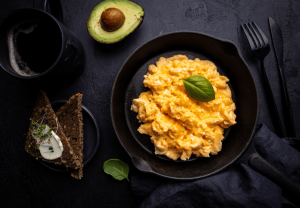
Whole eggs hit three categories at once — vitamin D, selenium, and dietary cholesterol for hormone synthesis. The yolk is the point. Anyone still eating egg whites only is eating half a meal hormonally speaking.
Spinach brings magnesium. Avocado brings both magnesium and monounsaturated fat — the kind of healthy fat your body uses to build steroid hormones. Butter keeps the fat profile right. This meal avoids the low-fat trap entirely.
This isn’t a complicated breakfast. It’s eggs and vegetables. It just happens to be one of the better foods that promote testosterone you can start a day with.
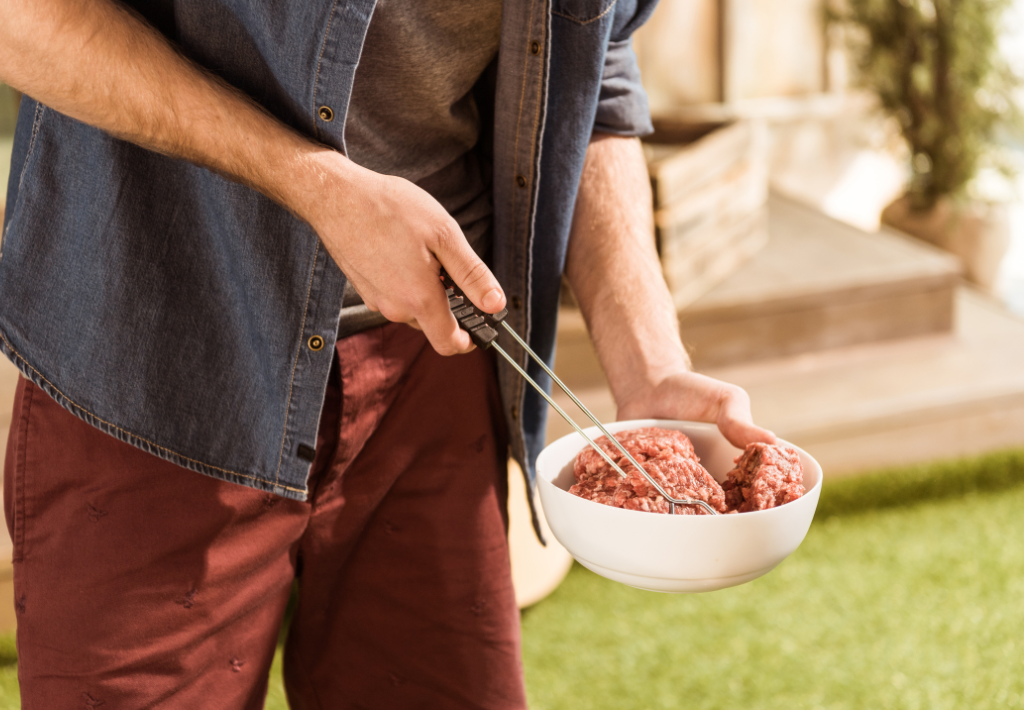
What’s on the plate: Ground beef (80/20) bowl over white rice + sautéed peppers and onions in olive oil + pumpkin seeds on top
Why it works as a testosterone boosting meal:
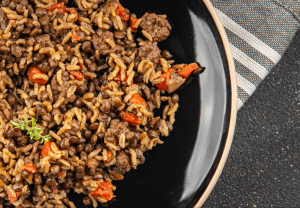
Ground beef is one of the best food testosterone boosters hiding in plain sight. It delivers zinc, saturated fat (the testosterone-friendly kind), B12, and iron in a single serving. The 80/20 fat ratio matters — lean beef doesn’t carry the same hormonal freight.
Olive oil brings monounsaturated fat and anti-inflammatory oleic acid. Pumpkin seeds are a concentrated source of zinc and magnesium, making them one of the most efficient top foods that help increase testosterone naturally per calorie.
White rice over brown? Yes. The lower fiber content of white rice means less interference with mineral absorption — magnesium and zinc are both susceptible to phytate binding from high-fiber grains.
This is a meal, not a supplement stack.
What’s on the plate: Pan-seared wild salmon + roasted broccoli with garlic and olive oil + baked sweet potato + a small side of full-fat Greek yogurt
Why it works as a testosterone boosting meal:
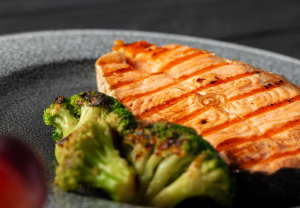
Salmon leads with omega-3 fatty acids and vitamin D — two of the strongest dietary contributors to healthy testosterone levels. Wild-caught over farmed when you can; the vitamin D and omega-3 content is meaningfully higher.
Broccoli contains indole-3-carbinol, a compound that supports healthy estrogen metabolism. More testosterone doesn’t help if excess estrogen is converting it back. Broccoli, cauliflower, and Brussels sprouts all carry this mechanism.
Sweet potato delivers complex carbohydrates and potassium without spiking insulin aggressively. Greek yogurt brings protein and zinc, rounds out recovery, and hits the gut microbiome angle — emerging research links gut health to systemic hormone regulation, though that’s a longer conversation.
This is one of the best foods to boost testosterone naturally built into a complete dinner.
What’s on the plate: A small handful of Brazil nuts (2–3 is enough) + a square or two of 85%+ dark chocolate + a handful of almonds
Why it works:
Brazil nuts are the single most concentrated dietary source of selenium available — 2 to 3 nuts can hit your daily requirement. Selenium protects testicular tissue from oxidative stress, which is the slow, invisible kind of damage that degrades hormone-producing cells over time.
Dark chocolate (85%+) carries both magnesium and flavonoid antioxidants that may support testosterone production. The key qualifier: low sugar. A high-sugar milk chocolate bar works against you. The 85%+ threshold is where the hormonal benefit and the sugar cost stop canceling each other out.
Almonds round out magnesium. This snack takes 30 seconds to assemble and covers three micronutrients your testosterone pathway actually needs.
Let’s flip the script for a second. We know what works… but what else is in the pantry that might be killing your testosterone?
The thing is… the foods that promote testosterone don’t do much if you’re simultaneously running a suppression protocol. Guys – get ready to make some tough decisions:
Ultra-processed foods drive chronic inflammation, which directly suppresses testosterone production. If it comes in a bag and has 15 ingredients you can’t pronounce, it’s working against your hormonal health. If it’s in a bag, leave it on the shelf.
Excessive alcohol Noooooo! Not beer, anything but beer!!! But here’s what happens: beer elevates estrogen, suppresses LH signaling from the pituitary, and degrades sleep quality, which is one of the biggest unacknowledged testosterone destroyers. A drink or two isn’t the issue. A drink or two every night is. Adios the man-boobs. Adios the beer.
Chronic low-fat eating — as covered above, repeated meta-analyses confirm low-fat diets depress testosterone in men. The fear of dietary fat is partly a 1980s relic. Fat is not the enemy. The wrong fats in the wrong amounts are. Go ahead and have bacon. Eat that burger.
High-soy diets — the phytoestrogen content of soy (isoflavones) can influence estrogen receptor activity. This is dose-dependent and individual — moderate amounts are unlikely to matter. But men eating soy protein isolate as a primary protein source daily should be aware of the mechanism.
Diet matters. These testosterone boosting meals give your body the raw materials it needs to produce testosterone efficiently. Many men notice real improvements in energy, recovery, and libido when they clean up their eating patterns consistently.
But food is support, not treatment.
If your testosterone is clinically low — confirmed by a blood panel, not just a suspicion — a diet change alone typically can’t close the gap. Low T has a floor. Once you’re there, you need more than better meals.
At Peak Performance Medical Center, we don’t guess. We test. A comprehensive hormone panel tells us where you actually are, and from there we build a protocol around your specific numbers — whether that’s dietary and lifestyle support, testosterone replacement therapy, or both.
Feeling better shouldn’t be complicated. Sometimes it starts at the grocery store. Sometimes it starts with a conversation about your labs.
You don’t have to be a rocket scientist (or even a molecular biologist) to understand how is testosterone produced in men? We spell it all out, simply, right here.
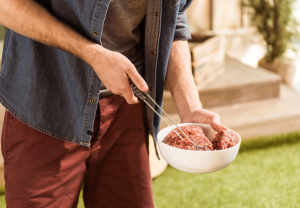
Testosterone boosting meals don’t have to be lame or complicated. In this series, we’re helping guys make mealtime easy with breakfast, lunch, dinner, and snack call outs. Less thinking. More eating. More testosterone.

If you’re holding off on TRT treatment because a little bird told you that it causes prostate cancer, you might be shocked about what you learn in this myth-busting series.

You kick off your weight-loss plan with passion and dedication. You start to measure results. THEN, Murphy’s law takes over. The wieght-loss stops. You double-down your efforts. And nothing happens. HERE’S WHAT’S REALLY GOING ON…

You DON’T have to suffer in silence. Most men do. But you’re not like most men. This article will walk you through all the options on the path to successful ED treatment.

Exhaustion, weight loss issues, anxiety, depression, and so many more wellness issues point to the thyroid glad. Do any of these issues sound like you?